Home Blog
What to Do If Unauthorized Persons Regularly Appear on Company Premises?
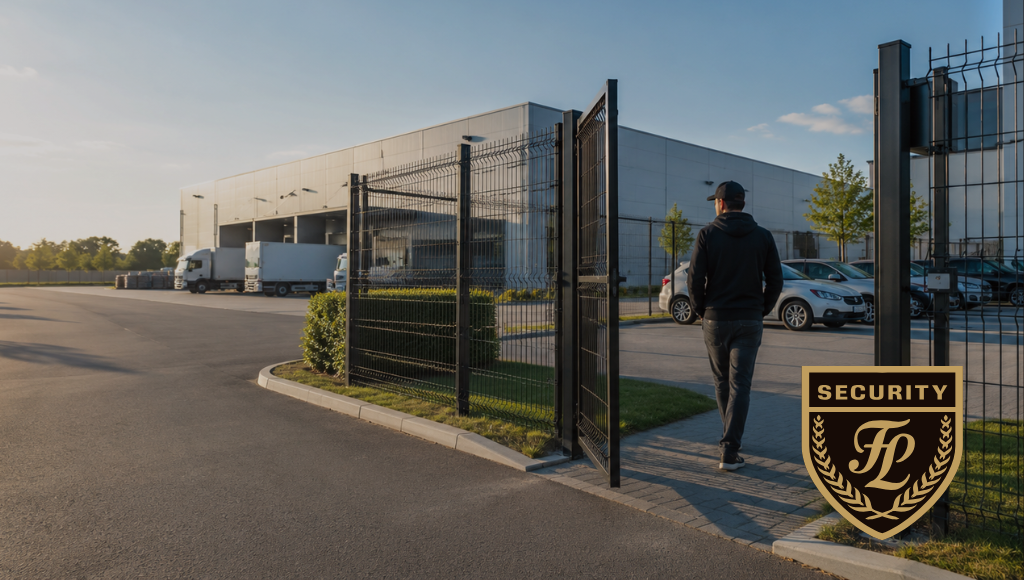
If unauthorized persons regularly appear on company premises, this should not be treated as a minor inconvenience or a “nothing will probably happen” situation. Such incidents are often a sign that the site lacks clear entry procedures, control mechanisms, or sufficient security presence.
For property managers, office building owners, and warehouse operators, this issue is particularly important. Unauthorized individuals on site can disrupt work, pose risks to employees, damage property, cause theft, or access information and areas that must be protected.
The good news? The situation can be improved. With well-designed access control, visitor registration, and professional site security, it is possible to significantly reduce risks and create a safer environment for everyone working in or visiting the premises.
Why is the presence of unauthorized persons a serious risk?
At first, an unauthorized person on the premises may seem like a confused individual who simply entered the wrong place. Sometimes that is true. However, if such situations occur regularly, they indicate a systemic security issue.
Unauthorized persons on site may create several risks:
- theft from warehouses, offices, parking areas, or technical rooms
- damage to property, equipment, or vehicles
- conflicts with employees, tenants, or clients
- unauthorized access to documents, server rooms, or production areas
- disruption of workflow
- increased liability risk in case of accidents
In office buildings, unauthorized persons may freely move through common areas if there is no entry control. In warehouses, the risk is even higher due to stored goods, tools, equipment, and vehicles. In managed properties, issues may arise in courtyards, stairwells, parking areas, and technical zones.
Therefore, the first step is not to wait for a serious incident, but to establish a clear system in advance.
1. Assess how unauthorized persons enter the premises
Before introducing new security measures, it is necessary to understand where the weaknesses are. In other words, identify how unauthorized persons are gaining access.
Consider the following questions:
- Are there multiple entrances and vehicle access points?
- Are all doors, gates, and access points controlled?
- Are visitors registered?
- Do employees know how to respond when they see an unauthorized person?
- Is video surveillance installed?
- Is security physically present or only responding on call?
- Are there areas that can be accessed without permission?
This assessment helps determine whether the problem is related to insufficient physical security, unclear visitor flow, lack of employee awareness, or a combination of these factors.
In practice, there is often a “non-official” entrance used by delivery personnel, couriers, employees, or passers-by. These locations typically become security vulnerabilities.
2. Implement a clear entry and access procedure
The site must have a simple and understandable system: where people may enter, where they must register, where vehicles may be parked, and where access is restricted.
A clear entry procedure benefits both employees and visitors. It also supports security personnel by removing uncertainty about whether a person is legitimately on site.
It is recommended to define:
- main entrance for visitors
- separate delivery and vehicle entry zone
- employee entrance
- restricted or controlled-access areas
- after-hours procedures
- responsible persons approving visitor entry
It is essential that this system is not only “on paper.” It must be visible, understandable, and applied in daily operations. Signage, clear markings, and controlled access points help avoid misunderstandings.
When people see order, control, and security presence, they are far less likely to remain on site without reason.
3. Implement visitor registration
One of the most effective ways to reduce risk is visitor registration. It helps track who is on site, who they are visiting, and how long they remain on the premises.
Visitor registration should include:
- first and last name
- company or organization represented
- purpose of visit
- person or department being visited
- arrival and departure time
- vehicle registration number (if applicable)
In office buildings, this helps control visitor flow and protect tenants. In warehouses, it helps manage movement of suppliers, drivers, and partners. In managed properties, it is especially useful for service providers, technicians, and subcontractors.
It is also important that visitors are not left unsupervised in areas where they should not be. For example, a visitor arriving for a meeting should not freely access warehouse or technical zones.
4. Improve access control
Access control is one of the key security elements when unauthorized persons appear regularly. It separates public areas from restricted zones and limits access to those who genuinely need it.
Access control may include:
- electronic access cards
- keypad entry systems
- turnstiles
- automatic gates
- permit systems
- security checkpoint control
- integration with video surveillance
It is not necessary to implement complex or expensive systems immediately. Sometimes it is sufficient to lock side doors, control the main entrance, and introduce a clear permit procedure. The main goal is to prevent unauthorized free movement across the site.
This is especially important in warehouses, production facilities, multi-tenant office buildings, and areas containing valuable goods or equipment.
5. Use professional site security
Technical solutions are useful, but in many facilities they are not sufficient on their own. Professional security provides presence, control, and immediate response when suspicious or unauthorized persons appear.
A security officer can:
- check individuals and vehicles
- control entry and access
- register visitors
- monitor CCTV systems
- conduct patrols
- detect suspicious behavior
- prevent conflicts
- respond to incidents
Security presence also has a preventive effect. In other words, it deters potential intruders before a problem occurs. When security, controlled entry, and order are visible, unauthorized access becomes significantly more difficult.
Feratum Life can help assess security needs and provide appropriate security solutions for specific situations — whether it is an office building, warehouse, commercial area, or managed property.
6. Improve video surveillance and lighting
Video surveillance is useful only when properly positioned and purposefully used. Cameras should cover key areas: entrances, gates, parking areas, warehouse zones, common spaces, and locations where unauthorized presence has previously been detected.
However, cameras alone do not stop intruders. They record incidents, but are most effective when combined with security response and a clear action plan.
Lighting is equally important. Dark areas near buildings, loading docks, fences, or parking spaces create opportunities for unauthorized presence. Good lighting reduces hiding spots and helps security personnel detect suspicious movement more quickly.
7. Train employees and tenants
Security is not only the responsibility of security staff or property owners. Employees, tenants, and facility management personnel can contribute significantly in daily operations.
They should know:
- how to recognize an unauthorized person
- who to report suspicious activity to
- whether they may approach a person themselves
- how to act in case of conflict
- which areas must remain closed
- why strangers should not be let in “behind them” through doors
A common issue is the so-called “courtesy entry,” where an employee opens a door for a stranger assuming they belong there. This seemingly minor action is one of the most common ways unauthorized persons gain access.
Regular communication and simple instructions help prevent such situations.
8. Create an incident response plan for repeated cases
If unauthorized persons appear regularly, every incident should be recorded. This helps identify whether there is a pattern in timing, location, or method of entry.
Incident records should include:
- date and time
- description of the person
- location of detection
- possible entry point
- actions taken by staff or security
- whether any damage occurred
- whether further action is required
This approach enables decisions based on facts rather than assumptions. For example, if multiple incidents occur in the evening near delivery gates, additional control measures should be implemented specifically in that area and time.
9. Review contracts with suppliers and subcontractors
Often, not only employees and clients enter the premises, but also delivery personnel, couriers, cleaning companies, technicians, and other partners. If their access rules are unclear, confusion arises.
Contracts or internal regulations should define:
- arrival times
- contact persons on site
- transport routes
- allowed areas of access
- registration requirements
- prohibition on transferring access passes
This helps prevent situations where individuals are present on site without clear accountability.
10. When should a security company be involved?
A security company should be involved not only after an incident, but as soon as early signs of recurring issues appear.
Professional assistance is especially needed if:
- unauthorized persons appear regularly
- valuable goods, equipment, or assets are stored on site
- theft or damage has occurred
- employees feel unsafe
- there are multiple entrances or access points
- there is no clear visitor registration
- 24/7 monitoring is required
- the site is located in a high-risk area
Security is not just a guard at the door. It is a system that includes risk assessment, control procedures, patrols, visitor checks, video monitoring, and rapid response.
Practical action plan for companies
To improve the situation step by step:
- Inspect the premises and identify weak points
- Establish clear entry and access procedures
- Implement visitor registration
- Restrict access to controlled areas
- Improve lighting and video surveillance
- Inform employees and tenants about procedures
- Record all incidents
- Engage professional security if issues persist
These steps will not only prevent unauthorized presence but also improve overall security on site.
Conclusion: security starts with clear order
Unauthorized persons on company premises should not be ignored. Even if no serious incident has occurred yet, repeated presence of strangers indicates security gaps.
Clear access procedures, visitor registration, structured access control, and professional site security help protect property, employees, and daily operations. The sooner these measures are implemented, the lower the risk that a minor issue will escalate into a serious incident.
If you want to improve security on your premises and prevent unauthorized access, Feratum Life is ready to help with professional and practical solutions.
Contact us:
phone: +371 27788250
email: feratum.life@inbox.lv, info@feratum.life